
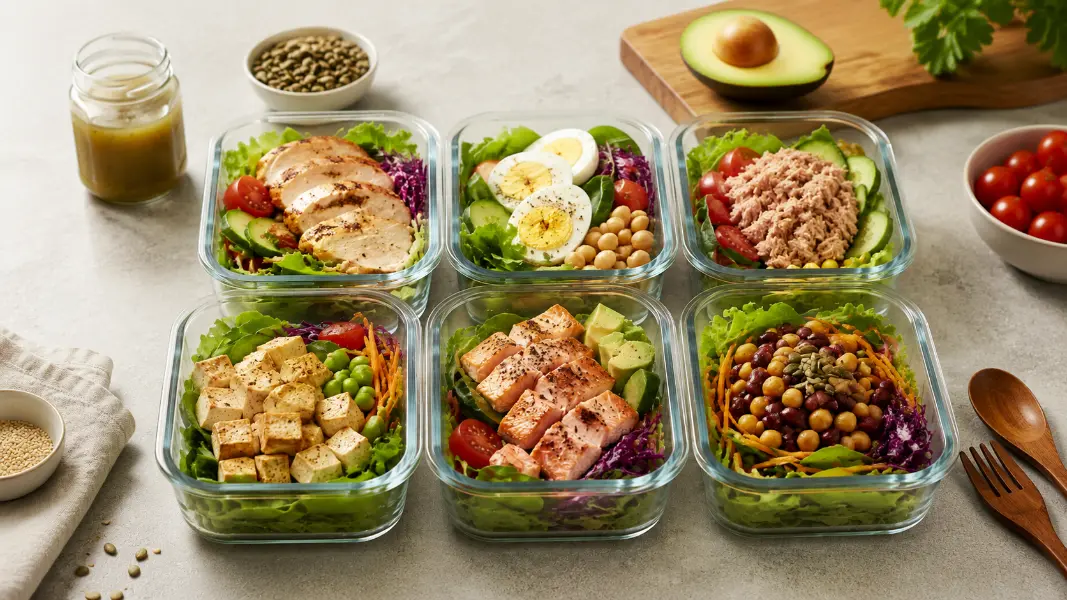
A healthy salad meal prep should include a reliable source of protein. Protein helps make the meal more satisfying, supports muscle maintenance, and reduces the chance of feeling hungry soon after lunch. Chicken, eggs, fish, tofu, tempeh, beans, lentils, yogurt, nuts, and seeds can all work well. The best choice depends on personal taste, dietary needs, storage conditions, and how long the meal will stay refrigerated.
Salads often have a healthy image, but not every salad provides a complete meal. A bowl filled only with leafy vegetables may contain useful vitamins, minerals, and fiber, yet it may not provide enough energy or protein for a busy day. This can leave office workers hungry again within a few hours. Adding a suitable protein source turns a light salad into a more balanced meal.
Chicken breast remains one of the most practical options for salad meal prep. It has a mild flavor that works with many vegetables and dressings. Grilled, roasted, or poached chicken can be sliced into portions and added to salads throughout the week. It pairs well with lettuce, tomatoes, cucumber, roasted vegetables, avocado, and whole grains. Chicken should be cooled properly before storage and kept in a clean, sealed container.
Eggs offer another simple and affordable choice. Boiled eggs are easy to prepare, portion, and carry to work. They add protein, healthy fats, and a creamy texture without requiring a heavy dressing. Eggs work especially well in salads with leafy greens, potatoes, beans, tomatoes, or whole-grain bread. Keeping the eggs separate until serving can help maintain the texture of the other ingredients.
Fish can give salad meal prep a different flavor profile. Tuna, salmon, and other cooked fish can provide protein and beneficial fats. Tuna works well in quick office lunches because it can be combined with vegetables, beans, corn, or whole grains.
Cooked salmon suits salads with spinach, cucumber, avocado, and citrus-based dressings. Fish requires careful refrigeration and should not remain at room temperature for long periods.
Plant-based eaters can choose tofu or tempeh. Both ingredients absorb marinades and seasonings well, which makes them suitable for many salad styles. Baked or grilled tofu adds a soft texture, while tempeh provides a firmer bite and a stronger flavor. These protein sources pair well with cabbage, carrots, edamame, brown rice, sesame dressing, and fresh herbs. Preparing them in advance can make weekday meals faster and more consistent.
Beans and lentils are also useful for meal prep. Chickpeas, black beans, kidney beans, and lentils add protein, fiber, and texture. They can make a salad more filling without requiring meat. A simple combination of chickpeas, cucumber, tomatoes, leafy vegetables, herbs, and a light dressing can create a practical lunch. Rinsing canned beans before use can improve their taste and remove excess liquid.
Greek yogurt can support both protein intake and flavor. It can be served as a side or used as the base for a creamy dressing. Mixed with lemon, herbs, garlic, or spices, yogurt can replace heavier dressings while keeping the salad rich and satisfying. It should remain refrigerated and should be stored separately from the vegetables until serving.
Nuts and seeds add texture, healthy fats, and a modest amount of protein. Almonds, walnuts, pumpkin seeds, sunflower seeds, and chia seeds can improve the taste of a salad. They work best as a supporting ingredient rather than the only protein source. Portion control matters because nuts and seeds contain concentrated energy. A small amount is usually enough to add crunch and flavor.
The right protein also depends on the rest of the meal. A salad with beans and whole grains may need less additional protein than a bowl made mainly from lettuce and cucumber. Dressing, vegetables, carbohydrates, and protein should work together. Combining several ingredients creates better flavor and helps the meal feel complete.
Safe storage remains essential. Cooked proteins should cool before refrigeration and stay in sealed containers. Dressings and wet ingredients should remain separate when possible. Prepared meals should stay cold during transport and should not sit on a desk for several hours. An insulated lunch bag and cold pack can help protect food quality when office refrigeration is unavailable.
Green Groceries makes balanced salad meal prep easier by providing fresh vegetables, quality ingredients, ready-to-eat options, and healthy meals designed for busy routines. Choosing the right protein transforms a basic salad into a practical lunch that supports steady energy, better satisfaction, and a more consistent approach to healthy eating.


